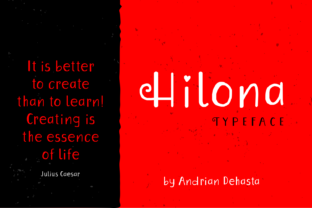
Hilona: A Serif Font with a Handwritten Soul for Editorial Design
When I was redesigning the header for my lifestyle blog, I needed a font that could balance charm and clarity. Hilona emerged as a perfect fit—not just because of its elegant serif structure, but because of its handwritten style that felt both personal and professional. As a Script Handwritten font, Hilona brings a unique warmth to editorial layouts without sacrificing readability, making it an ideal choice for a wide range of content types.
Hilona for Wedding Invitations and Elegant Branding
Wedding invitations often require a touch of sophistication and personality, and Hilona delivers exactly that. Its charming serif design adds a handcrafted feel to stationery, while its legibility ensures that important details like names and dates are easy to read. Whether used in a digital invitation or a printed card, Hilona supports the editorial mood of elegance and intimacy. For branding purposes, this font can be paired with a clean sans serif typeface to create a balanced visual hierarchy that reinforces brand identity without overwhelming the reader.
Hilona for Recipe Ebooks and Food-Related Content
Recipe ebooks demand a font that is both inviting and functional. Hilona’s handwritten style gives recipes a friendly, approachable tone, which is especially effective when paired with sweet messages or warm instructions. Its script elements add a tactile quality to the text, encouraging readers to engage with the content as if they were reading from a handwritten journal. However, it’s important to note that Hilona is not designed for dense body copy; instead, it shines best in titles, headings, and decorative accents within recipe sections. Pairing it with a readable serif or sans serif font for the main text ensures that the overall layout remains accessible and visually cohesive.
Hilona for Magazine Covers and Editorial Feature Pages
In the world of print and digital magazines, first impressions matter—and Hilona is a font that makes an impression. Its serif structure provides a classic foundation, while its handwritten flair adds a modern twist. This makes it particularly well-suited for magazine covers, where the goal is to capture attention while maintaining readability. On feature pages, Hilona can be used to highlight key quotes or section titles, guiding the reader through the content with a gentle, flowing rhythm. Its versatility allows it to support both the editorial mood and the publication identity, ensuring that every page feels intentional and well-designed.
Hilona for Newsletter Headers and Pull Quotes
Newsletters often serve as a bridge between brands and their audiences, and Hilona can play a crucial role in shaping that connection. As a Script Handwritten font, it works beautifully in headers, where it can draw the eye and set the tone for the content that follows. When used in pull quotes, Hilona’s expressive style adds a layer of emotion and emphasis, making key phrases stand out without disrupting the flow of the article. To maintain balance, it’s recommended to pair Hilona with a more neutral typeface for body text, ensuring that the overall layout remains clear and easy to navigate.
Hilona for Coaching Workbooks and Printable Guides
Coaching workbooks and printable guides often require a font that feels both professional and approachable. Hilona’s handwritten style lends itself well to this purpose, offering a sense of authenticity and warmth that resonates with readers. It can be used effectively in chapter openers, motivational quotes, and even in small sections of notes or reflections. However, due to its expressive nature, Hilona may not be the best choice for long-form body text or dense paragraphs. Instead, it should be reserved for decorative elements or key points that benefit from its unique character.
Hilona for Digital Design and Web Layouts
As a Fonts designer, I’ve found that Hilona performs exceptionally well in digital environments. Its legibility on screens, combined with its stylish appeal, makes it a great choice for web layouts, social media graphics, and online publications. When using Hilona in digital formats, it’s essential to consider file formats, weights, and ligatures to ensure optimal performance across different platforms. Additionally, testing Hilona in various sizes and backgrounds can help determine how it behaves in different contexts, from large headlines to smaller captions.
Hilona for Content Branding and Visual Hierarchy
Content branding is all about creating a consistent and recognizable visual identity, and Hilona can contribute significantly to this effort. Its serif structure and handwritten style offer a unique way to differentiate a brand from competitors, especially in industries like lifestyle, wellness, and creative publishing. When designing for visual hierarchy, Hilona can be used to emphasize key elements such as headings, subheadings, and call-to-action buttons. By pairing it with complementary fonts, designers can create a layered typographic system that enhances both aesthetics and functionality.